Quick verdict
Do not clean, sort aggressively or sell inherited coins during the first inspection. Secure the collection, preserve packaging and provenance, create a numbered inventory, clarify estate authority and obtain appropriate independent valuations. Bullion, proof and numismatic coins require different comparisons. A dealer who is both valuing and buying may be useful, but an additional independent opinion is sensible when value or rarity is uncertain.
Secure first, handle less
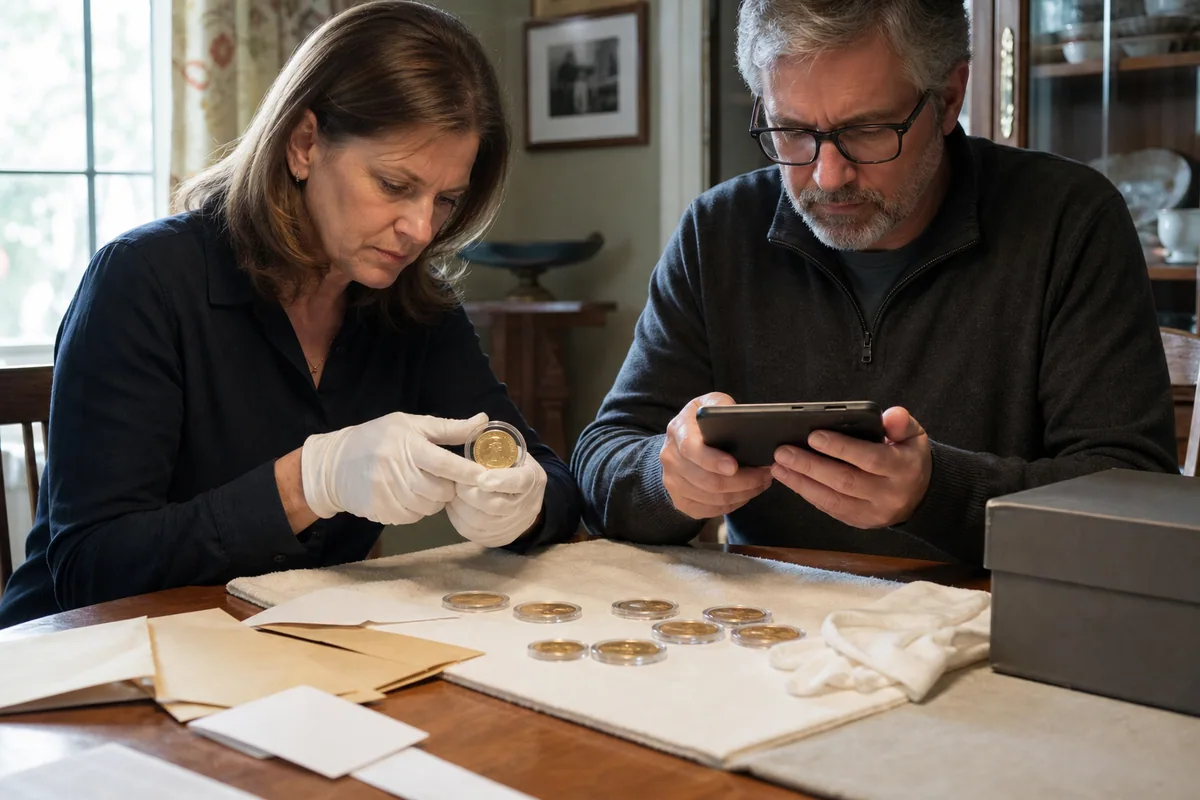
Move the items from an obvious drawer to a secure, dry arrangement consistent with estate authority and insurance. Avoid public discussion and do not carry the entire collection from shop to shop without a plan. Wear clean cotton or nitrile gloves only if appropriate and handle coins by edges; better still, leave intact holders untouched. Do not polish, dip or test with acid. Preserve envelopes, certificates, invoices and handwritten notes because provenance can matter. Photograph each item and its container without exposing the storage location.
Build a numbered inventory
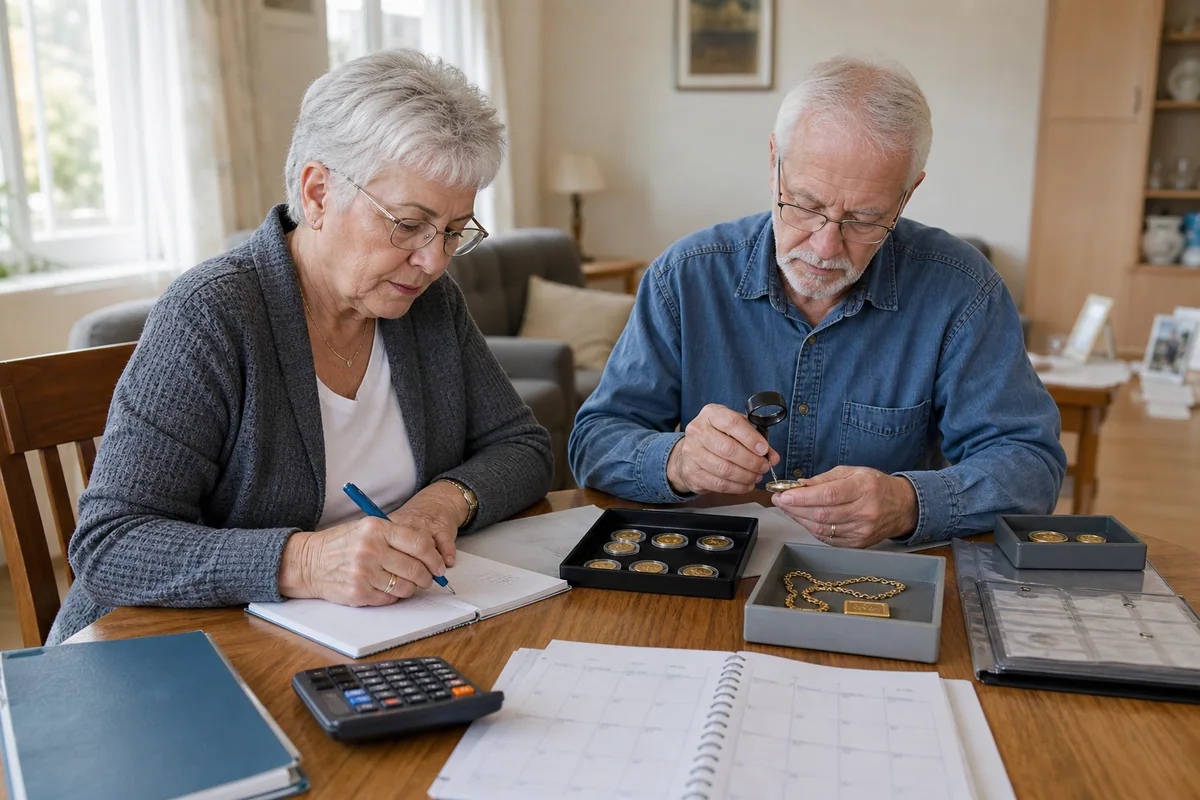
Assign a simple reference to each coin or group. Record visible country, denomination, year, design, stated weight, packaging, certificate and condition without declaring authenticity. Photograph both sides through the holder where possible. Note whether pieces appear identical. Weighing and measuring can assist later research but should not damage packaging. Store the inventory separately. The aim is to prevent substitution or confusion and give an adviser or valuer a clear scope, not to become an overnight numismatist.
Separate legal and valuation questions
Confirm who has authority to move, value or sell estate property and what date or basis the probate and tax process requires. A market sale price today may not be the same as an estate valuation at another date. Ask the executor, solicitor or tax professional what evidence is needed. For unusual or potentially collectable coins, seek a specialist numismatic valuation separate from an ordinary bullion bid. For standard bullion, compare metal content, current bids and condition. Do not let tax or family distribution assumptions rest on an online image match.
Choose keep, divide or sell deliberately
Discuss sentimental significance, fairness between beneficiaries, storage responsibility and the cost of splitting indivisible items. If selling, compare verified buyers and price-fixing terms, and document estate proceeds. If keeping, transfer ownership records, insurance and storage instructions. A coin can be worth more to one relative as a family object than its bullion price, but estate fairness may require an agreed valuation. Record the decision and who received each numbered item to reduce future disputes.
Often a better fit when
- Executors and families discovering an unfamiliar coin group.
- Beneficiaries deciding between keeping and selling.
- Collections mixing bullion, proof and older coins.
Pause or skip when
- You lack authority to remove estate property.
- A buyer pressures for immediate cleaning, testing or sale.
- A rare-item conclusion comes only from an image-search match.
Buying checklist
- Confirm estate authority before moving or selling items.
- Preserve holders, notes, invoices and condition.
- Create a numbered photographic inventory.
- Separate bullion valuation from numismatic expertise.
- Document distribution, sale proceeds, storage and tax advice.
Compare the route before the provider
Use our neutral framework to compare ownership, total cost, safeguards and exit terms.
Questions readers ask
Should inherited gold coins be cleaned?
No. Cleaning can permanently damage surfaces and reduce collectable value. Leave coins in existing holders and seek specialist advice before any conservation.
Is melt value enough for probate?
Not always. The required valuation basis depends on estate and tax circumstances, and a collectable coin may exceed metal value. Ask the estate professional what date, method and evidence are required.
Can siblings divide coins equally by count?
Equal counts may not mean equal value because weight, purity, rarity and condition differ. Inventory and value the items, then document an agreed division or sale process.
Sources and further checks
Sources were last reviewed on 2026-08-26. Rules and provider terms can change.